

CORPORATE
Monday, February 23, 2026
Summary
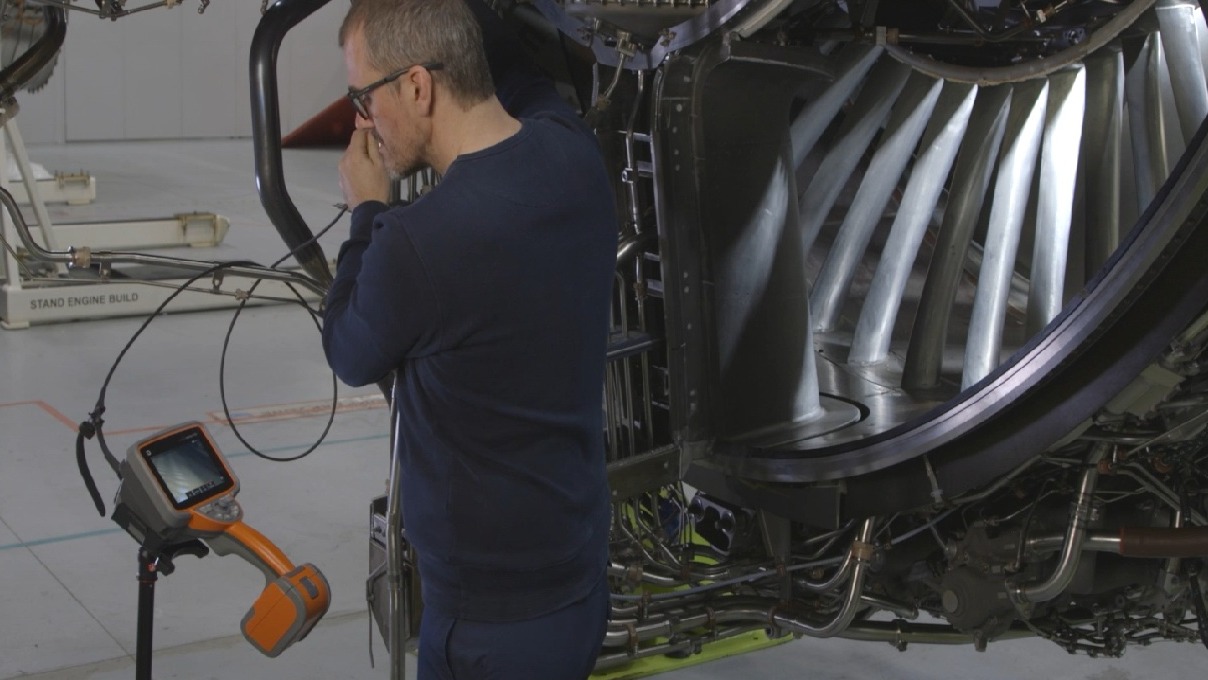
Routine visual inspections on gas turbine engine blades are crucial to ensuring engine integrity. Turning Tool 2.0 (TT2.0) is a feature on the Mentor Visual iQ+ video borescope that speeds up the process of individual blade inspection. This automation allows technicians to complete thorough blade inspections more efficiently.
Turning Tool 2.0 1 Turning Tool 2.0 makes inspectors’ lives easier by:
• Allowing one inspector to rotate the blades via video borescope
• Minimizing human error
• Reducing time spent on overall inspection
Challenge Currently, the most common way to inspect the individual blades of a gas turbine engine requires two technicians, one to handle the video borescope and the other operates the wrench to rotate the engine blades. Typically, the second turner cannot see the borescope screen, so they rely completely on verbal communication from the inspector. The inspector ensures the speed of rotation and indicates when to stop and when they detect artefacts. This back-and-forth process is required to conduct detailed interrogation or analysis. Communication between the two technicians can add a considerable amount of time to the overall inspection and increase the probability of human error.
Solution Turning Tool 2.0 is a new feature on the Everest Mentor Visual iQ+ that automates blade rotation to streamline gas turbine inspections across multiple sectors like aviation and power generation. Created through a technology partnership between Rhinestahl and Waygate Technologies, Turning Tool 2.0 allows operation of the FutureDrive NG+ directly from the Mentor Visual iQ+, thereby reducing human factors during borescope inspections. Consistent rotation and periodic image capture (if required) is now all possible with direct control from the MViQ+ handset alone. The feature also facilitates multiple inspection revolutions to enable periodic probe adjustments before subsequent blade rotations, and captures, continue.
Enhanced Communication Functionality
The inspector fits the adapter and motor to the asset along with electrical connectivity to the control unit and the handheld handset. Some functions currently remain only accessible on the FutureDrive such as engine and stage selection together with backlash setup. Turning Tool 2.0 has 2-way communication with the Mentor Visual iQ+ to allow for repeatable image capture of every blade in each stage. Previous time delay image capture (TT1.0) sometimes caused erroneous image captures (time sync errors) and incorporated unnecessary waiting times between blade stop and image capture. Now consistent images are provided in less time with automatic blade detection and labeling as the FutureDrive rotates the engine blades. When taking pictures of each blade, Turning Tool 2.0 will rotate so each blade is visible by the MViQ+. The device will take a picture of the blade and signal to the FutureDrive to index to the next blade. The integrated tool also offers on-screen control options, allowing inspectors to control rotation directly from the borescope handset. Easily command a pause and perform measurements during the inspection sequence and utilize onboard MViQ+ features before resuming Turning Tool rotation all without interaction on the FutureDrive handset.
Conclusion
Turning Tool 2.0 saves technicians time by streamlining engine blade inspections. The 2-way communication between the MViQ+ video borescope and the FutureDrive provides automatic blade numbering and image capture, decreasing wait time and the potential for human error. Inspectors can create reports faster because of Turning Tool 2.0’s automated blade image capture. Customers can expect less downtime during visual inspections of gas turbine engines and accurate defection detection reporting.
